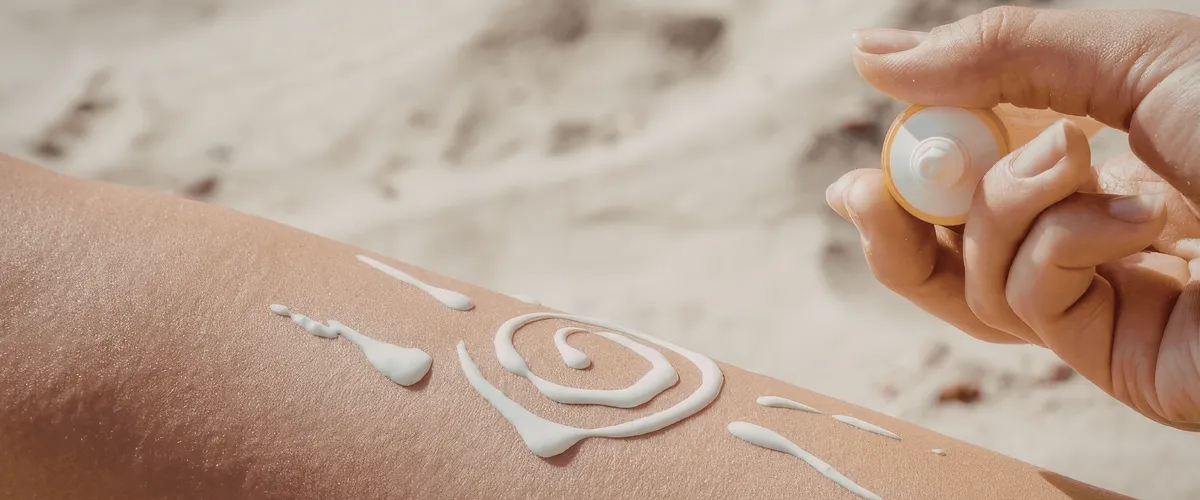
The best sunscreen is the one you will actually use. That said, there are meaningful differences between formulations — and living in the UAE, where UV index regularly hits 11+ in summer, the choice matters more than in cooler climates.
SPF 30 or SPF 50?
SPF 30 blocks approximately 97% of UVB rays. SPF 50 blocks about 98%. The difference sounds small — and in a lab setting, it is. In real life, where people apply far less than the tested amount, SPF 50 provides a meaningful buffer. For the UAE climate and anyone with melasma, post-inflammatory hyperpigmentation, or a history of skin cancer, SPF 50 is my recommendation.
Broad-spectrum: what it means
UVB rays cause sunburn and most skin cancers. UVA rays cause aging, pigmentation, and also contribute to skin cancer — and they penetrate glass and cloud cover. Broad-spectrum means the formula protects against both. This is non-negotiable. Check the label for ‘broad-spectrum’ or, in European formulations, a UVA circle logo.
Chemical vs mineral
Chemical sunscreens (avobenzone, octinoxate, oxybenzone) absorb UV rays and convert them to heat. They tend to be lighter, easier to blend, and invisible on the skin. Mineral sunscreens (zinc oxide, titanium dioxide) physically reflect UV rays. They’re less likely to irritate sensitive skin or trigger rosacea, but can leave a white cast — though newer micronised formulas have largely solved this. Both work. Choose based on your skin type and preference.
How much to apply
Most people apply 20–50% of the amount needed to achieve the SPF on the label. For the face and neck, use approximately a teaspoon (or the equivalent of two finger lengths). Apply as the last step of your morning routine, before makeup. Reapply every 2 hours when outdoors, and after swimming or sweating. A sunscreen worn correctly at SPF 30 outperforms one worn incorrectly at SPF 100.
Have a skin concern?
Book a consultation with our specialists
Our board-certified dermatologists provide personalised, evidence-based care.