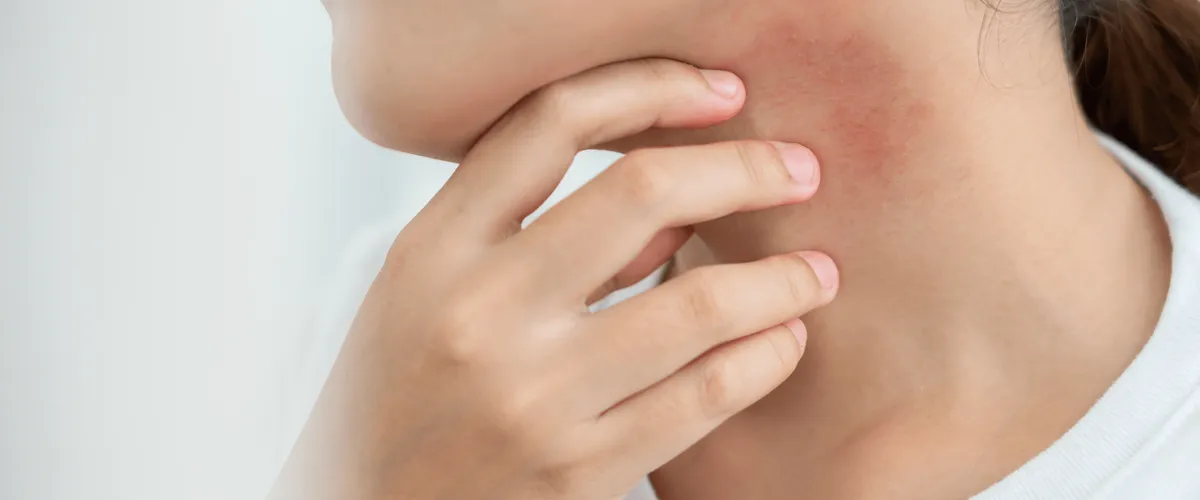
Atopic dermatitis (eczema) affects roughly 15–20% of children and 5–10% of adults in the UAE — rates that are higher than global averages. The combination of extreme heat, low humidity indoors (from aggressive air conditioning), sand, dust, and hard water creates a perfect storm for barrier dysfunction and chronic inflammation.
Understanding your triggers
Before you can manage eczema effectively, you need to identify what worsens it for you. Common UAE-specific triggers include: sweat, which is both a direct irritant and a medium for microbial overgrowth; chlorinated pool water; synthetic fabrics that trap heat; dust mites, which thrive in humid conditions; and the sudden temperature change between outdoor heat and cold air conditioning. Keep a flare diary for 4–6 weeks, noting activities, foods, environment, and products used on days when your skin worsens.
Moisturising: the non-negotiable foundation
For eczema, moisturiser is medicine. The goal is to reinforce the skin barrier so that irritants and allergens cannot penetrate as easily. Apply an emollient (thick cream or ointment, not lotion) within three minutes of bathing while the skin is still slightly damp. In the UAE, many patients need to moisturise twice or three times daily due to AC-induced dryness. Look for ceramide-rich formulas — CeraVe, Eucerin Aquaphor, or prescription emollients your dermatologist can recommend.
Bathing habits
Shower with lukewarm — not hot — water for no more than 10 minutes. Use a fragrance-free, soap-free wash. Pat dry gently with a soft towel; do not rub. If you swim, shower with fresh water immediately after and moisturise straight away. Hard water (high in calcium and magnesium) is common in the UAE and is a known eczema irritant — a shower filter can make a meaningful difference for some patients.
When to seek treatment
If your eczema is affecting your sleep, causing significant discomfort, or not responding to over-the-counter emollients, see a dermatologist. Prescription options have expanded enormously in recent years — from topical steroids and tacrolimus to biologics like dupilumab for moderate-to-severe cases. There is no reason to simply ‘live with’ eczema in 2025. Effective, safe treatments exist.
Have a skin concern?
Book a consultation with our specialists
Our board-certified dermatologists provide personalised, evidence-based care.