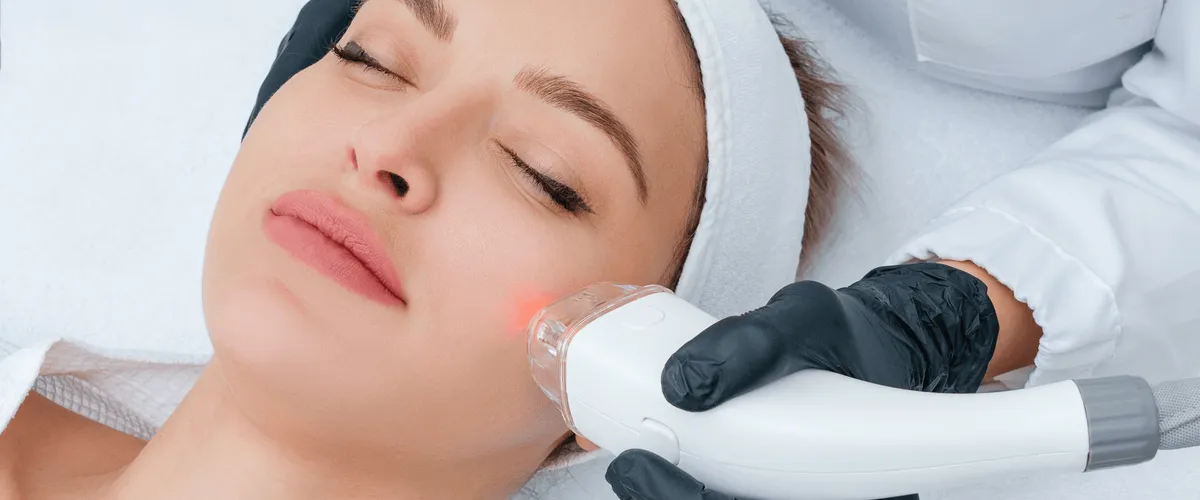
Laser hair removal is one of the most requested treatments at our clinic. It’s also one of the most misunderstood — particularly around who is and isn’t a candidate. The short answer is: with today’s technology, almost anyone can benefit safely.
How it works
Laser energy targets the melanin (pigment) in the hair follicle, converting it to heat and disabling the follicle’s ability to regrow hair. For this reason, the treatment is most effective when there is contrast between hair colour and skin tone — dark hair responds best. Very light blonde, grey, or white hair contains little melanin and does not respond well to any current laser technology.
What about darker skin tones?
Early laser systems carried a real risk of burns and pigmentation changes on darker skin tones because they couldn’t distinguish between follicle melanin and skin melanin. Nd:YAG 1064nm lasers, which are the standard at our clinic, have a longer wavelength that bypasses surface melanin and safely treats Fitzpatrick types IV–VI. If a clinic cannot tell you which laser they use or doesn’t mention skin type compatibility, that is a red flag.
How many sessions will I need?
Hair grows in cycles — only follicles in the active growth phase (anagen) are effectively treated per session. Most patients need 6–8 sessions spaced 4–8 weeks apart for the body, and 4–6 weeks for the face. After a full course, most patients see 80–90% permanent reduction. Hormonal changes (pregnancy, PCOS) can stimulate new follicles and may require maintenance sessions.
Preparing for your session
Shave the area 24 hours before your appointment — do not wax or pluck, as these remove the follicle that the laser needs to target. Avoid sun exposure and self-tanner for 4 weeks before treatment. Do not apply deodorant to underarm areas on the day of your appointment. Avoid retinoids and AHAs on the treatment area for 48 hours prior.
Aftercare
Redness and mild swelling in the treated area is normal and typically resolves within a few hours to 48 hours. Avoid heat (saunas, hot showers, exercise) for 24–48 hours. Apply SPF 50 if the treated area is sun-exposed. Do not pick at any crusting or redness. Moisturise the area daily with a fragrance-free lotion.
Have a skin concern?
Book a consultation with our specialists
Our board-certified dermatologists provide personalised, evidence-based care.